
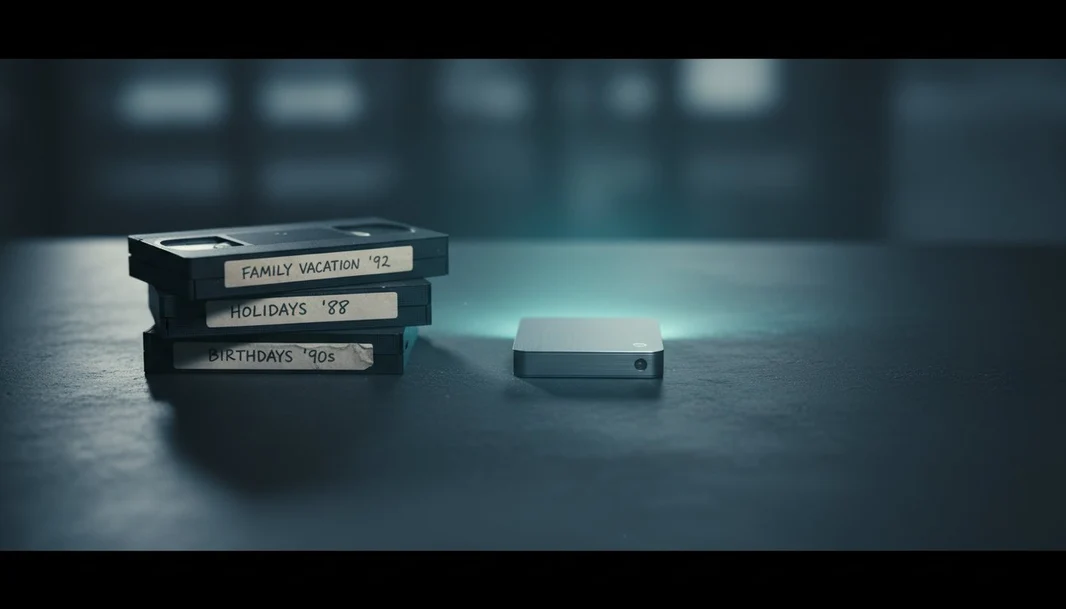
Imagine opening a storage bin in your San Clemente garage and discovering your 1994 wedding video covered in a thin, white powder. This is tape rot. Magnetic media often begins to degrade after just 15 years, which means many tapes from the 1980s and 90s are already at high risk. Converting your video cassette to digital is no longer just a hobby project; it’s a necessary step to preserve your family history before it disappears forever. We know you want to protect these memories without the stress of confusing hardware or the fear of shipping your only copy to a faceless warehouse.
You deserve a solution that provides high-quality results and total peace of mind. This article compares the DIY approach with professional local services available right here in South Orange County. We will break down the technical requirements for home setups and the benefits of using a trusted professional transfer service. By the end, you’ll have a clear path to turning those aging tapes into lasting digital files that your family can watch for decades to come.
Key Takeaways
- Understand why the “20-year rule” means your magnetic tapes are physically failing and why immediate action is needed to preserve your history.
- Compare the hardware and software needed for a DIY video cassette to digital transfer against the results of professional-grade equipment.
- Learn how specialized tools like Time Base Correctors (TBC) can stabilize shaky footage and restore the clarity of your original recordings.
- Discover the benefits of choosing a local South Orange County expert to avoid the risks and “shipping anxiety” associated with mail-in services.
- Use our decision matrix to weigh time, quality, and risk to determine the best way to safeguard your family’s video legacy.
The State of Video Cassette to Digital in 2026: Why Timing is Everything
The window for preserving family history is closing fast. By 2026, the majority of magnetic tapes like VHS, Betamax, and Hi8 have reached a critical failure point. This phenomenon is often called the 20-year rule. Magnetic media relies on a chemical binder to hold data on the tape surface. After two decades, this binder begins to break down. Your video cassette to digital conversion is no longer a luxury; it’s a necessary rescue mission for your memories. The conversion process takes those fragile analog signals and stabilizes them into modern MP4 or MOV files that you can watch on any device.
South Orange County families face unique environmental challenges. Coastal humidity in cities like Dana Point or Laguna Beach accelerates a process called binder hydrolysis. This makes tapes sticky or extremely brittle. Attempting to play these legacy formats in an old Videocassette recorder (VCR) is now a significant risk. A degraded tape can snap instantly or shed oxide particles that clog the VCR heads. Once a tape snaps or the magnetic layer peels, the footage is often lost forever.
Understanding Tape Decay: Mold and Vinegar Syndrome
You can often spot trouble before you even try to play a tape. Inspect the clear plastic windows of your VHS reels. If you see white, fuzzy patches, that’s mold. It thrives in the dark, cool storage bins found in many Orange County garages. You should also check for a sharp, acidic smell. This scent indicates vinegar syndrome, a chemical reaction where the acetate base of the tape decomposes. Don’t put these tapes into a working player. The mold spores and chemicals can ruin your hardware and contaminate your entire collection.
The Digital Advantage for Orange County Families
The move from video cassette to digital provides immediate practical benefits for local households. Space is at a premium in Southern California. You can replace entire closet shelves of bulky plastic cases with a single, secure cloud drive or a thumb drive. This transition makes your history shareable. You can send a link of a 1994 birthday party to relatives in Aliso Viejo or across the globe in seconds. Most importantly, digital files provide future-proofing. They ensure your 1990s home movies stay compatible with 2026 smart TVs and whatever technology comes next. We are the trusted guardians of these moments, ensuring they don’t fade away with the physical tape.
DIY Conversion: Evaluating USB Capture Cards and Home Software
Converting a video cassette to digital at home requires a specific hardware stack. You need a functioning VCR, a set of RCA cables, and a USB capture “dongle” to bridge the gap between analog and digital. While the process seems straightforward, the technical requirements often surprise many hobbyists in South Orange County. You must choose between free software like OBS Studio or paid consumer suites. Each path involves a steep learning curve that includes managing frame rates and interlacing issues.
The DIY route makes sense if you have hundreds of tapes and a high tolerance for technical troubleshooting. However, it’s often a recipe for frustration for those who value their time. You’ll spend hours adjusting aspect ratios so your 4:3 footage doesn’t look distorted on a modern 16:9 television. It’s a delicate balance of technical skill and patience. Most people find that the initial excitement of a DIY project fades after the first few hours of software crashes and signal errors.
The $20 Amazon Converter Trap
Cheap USB converters are common, but they often lead to significant audio-video sync issues. After just 10 minutes of recording, the sound may drift away from the image by 2 or 3 seconds. These budget devices frequently suffer from “dropped frames,” which creates a jerky, unwatchable viewing experience. Because these generic sticks lack official support, a simple Windows or Mac update can break the driver and leave you with useless hardware and no path forward.
Equipment Scarcity in South Orange County
Finding a reliable, high-head-count VCR in San Clemente or Irvine is increasingly difficult in 2026. Most units found at local thrift stores or garage sales are 30 years old and require internal maintenance. Old rubber belts perish and video heads become clogged with oxide. Using a neglected machine is risky; it could easily tangle or “eat” your irreplaceable tapes. Maintaining this gear requires specialized tools and cleaning fluids that are no longer sold in big-box stores. If you want to avoid the stress of hardware failure, preserving memories through a professional service is a safer alternative for your family history.
Professional Digitization vs. Home Kits: A Quality Comparison
Converting a video cassette to digital at home often seems like a simple weekend project. Most consumer kits rely on $20 plastic USB converters. These devices lack the internal circuitry to process weak analog signals. Professional labs use broadcast-grade decks and external processors. These machines extract every line of resolution from a magnetic tape. They provide a level of clarity that consumer hardware cannot reach.
Why Professional Gear Wins on Stability
Old tapes often suffer from signal jitter. This looks like a shaky image or horizontal tearing across the screen. These issues are frequent in recordings made in EP or SLP modes. These slow-speed settings were popular in 1990 for fitting six hours of footage on one tape, but they produce a thin signal. Professional decks use advanced tracking to stabilize these recordings. The Time Base Corrector is the brain of professional transfer gear. This device realigns the timing of every video frame. It ensures a rock-solid image for your digital file.
Professional transfers also address the visual noise common in 1980s footage. Home transfers often look grainy or washed-out. Professional hardware applies real-time color correction to fix these shifts. We use high-bitrate archival formats, such as 50Mbps files, to preserve the original quality. This is ten times the data density of a standard DVD. Your memories won’t degrade when viewed on modern 4K screens.
Handling Specialized Formats: Beyond Standard VHS
Many families own more than just standard tapes. Moving a MiniDV or Digital8 video cassette to digital is difficult because working playback units are rare in 2024. The mechanical parts in these cameras often fail after two decades of storage. Professional scanning is also essential for 8mm and Super 8 film reels. These require frame-by-frame capture to avoid the flicker associated with home projectors. If your collection includes 35mm slides alongside your tapes, consider our Professional Slide Scanning Service in Laguna Woods for a complete preservation solution. This ensures every piece of your history is handled with the same level of technical precision.

Local Service vs. Mail-In Kits: Protecting Your Memories in South OC
Choosing how to convert your video cassette to digital involves more than just comparing prices. It is about security. When you mail a box of tapes to a national warehouse, you lose control of your family history. In 2023, major couriers reported a 1.4% package loss rate during peak shipping seasons. For a one of a kind wedding video or a baby’s first steps, that risk is too high. Choosing a local South Orange County service removes this shipping anxiety entirely.
Local accountability matters. You can drive to a studio in Laguna Hills or Mission Viejo and speak directly to the technician handling your media. This face to face interaction ensures your tapes receive specialized care. National warehouses often require an 8 week wait for your files to return. Local transfers typically finish in a fraction of that time. By staying local, you also support the South Orange County small business economy. Your investment stays within the community while your memories stay safe.
- Direct Hand-off: No risk of lost or damaged packages in the mail.
- Faster Turnaround: Avoid the 2 month backlog of national factories.
- Clear Communication: Talk to the person actually doing the work.
The Risks of National ‘Legacy’ Brands
National brands operate like assembly lines. They process thousands of tapes every day. This mass-production approach lacks the individual attention your memories deserve. You often pay hidden costs for “protection kits” or shipping insurance. Unfortunately, insurance cannot replace a lost tape from 1985. In early 2026, logistics reports showed that courier reliability decreased by 4% due to regional hub bottlenecks. Your box might sit in a hot sorting facility for days. These companies prioritize volume over the delicate nature of magnetic tape.
The Benefits of a Local Laguna Woods Partner
A partner in Laguna Woods provides a personalized experience for residents in Irvine and San Clemente. A direct hand-off means your tapes never leave the local area. You won’t worry about a box getting crushed in a mail truck. Our experts offer advice on organizing your collection before we start. If you have 50 tapes, we help you identify the high priority ones. This consultation happens in person, not through a support ticket. We focus on the quality of every video cassette to digital conversion. Your memories stay close to home where they belong.
Preserve your history today with a trusted local expert for film and tape transfers.
Choosing the Best Path for Your Video Legacy
Deciding how to convert your video cassette to digital files depends on three factors: time, quality, and risk. DIY projects require a significant investment in hardware and software. It’s a 1:1 time commitment, meaning 50 hours of footage takes 50 hours of active monitoring. Professional transfers eliminate this labor. We use industrial-grade playback decks that stabilize signals and correct colors in ways home converters cannot match. This choice protects your media from the physical risks of aging home equipment that might tangle or snap brittle tape.
The emotional impact of this project is profound. Seeing a late parent’s smile or hearing a child’s first words in clear, digital high definition provides a connection that a grainy, flickering tape cannot offer. It transforms a fragile plastic box into a permanent family asset. For families in South Orange County, taking this step ensures your history remains accessible for the next 50 years.
Inventorying Your Collection
Success begins with organization. Group your media by format to streamline the process. VHS, VHS-C, and Hi8 tapes often look similar but require different handling. Use these steps to prepare:
- Sort by Date: Use the handwritten labels to create a chronological timeline.
- Identify Priorities: Mark tapes of weddings, births, or unique family milestones as “urgent” for digitization.
- Check for Damage: Carefully inspect the clear windows of each shell to look for white powdery spots or loose, crinkled tape before bringing them to a specialist.
This preparation helps ensure that the most vulnerable and valuable memories are processed first.
The Film and Tape Transfers Difference
Our team provides a reliable, local solution for the South OC community. We operate with the understanding that we are the trusted guardians of your personal history. Our Laguna Woods facility is equipped with specialized technology to handle delicate media with precision. We don’t just move data; we preserve the specific details that make your memories unique. Our local expertise and commitment to quality make us the preferred choice for 2026 preservation projects. Don’t let your history fade away on a shelf.
Next Steps: Gather your boxes and visit us in Laguna Woods to begin your project. Preserve your memories with our local South Orange County transfer service today.
Secure Your Family Legacy for the Future
Magnetic tape isn’t built to last forever. Industry data shows that VHS tapes typically begin significant degradation after 30 years. With many home movies filmed in the 1980s and 1990s, the window for a high-quality video cassette to digital transfer is closing. While DIY home software and USB capture cards offer a basic entry point, they often lack the signal stability and resolution provided by specialized archival equipment. Since 1990, we’ve served the Laguna Woods and Irvine communities as a trusted guardian of personal history. We use professional-grade playback decks to ensure every frame is preserved with high-fidelity clarity. Choosing a local South Orange County expert means your irreplaceable media never leaves the region or risks getting lost in a massive mail-in sorting facility. Your family’s unique story deserves a permanent, secure digital home. It’s time to move these memories off the shelf and into the future where they can be shared easily with everyone you love.
Start your video transfer project in South Orange County today
We look forward to helping you protect your most precious moments for the next generation.
Frequently Asked Questions
Is it better to convert VHS to DVD or digital files like MP4?
Digital files like MP4 are the best choice for long term preservation. Unlike DVDs, which can scratch or degrade over time, digital files live on your computer or in the cloud. This format makes it easy to share your memories with family members across the country instantly. Most modern devices no longer include disc drives, so choosing a digital format ensures your footage remains accessible for decades.
How much does it cost to convert a video cassette to digital in Orange County?
Costs for a video cassette to digital transfer in Orange County depend on the total number of tapes and the specific media format. Many local labs offer tiered pricing where the cost per tape decreases as your order size increases. We provide detailed estimates after reviewing your collection to ensure you receive the best value for your preservation project without any hidden fees.
Can you fix a VHS tape that has been snapped or damaged?
We can repair most snapped or physically damaged tapes using professional splicing techniques. If the outer plastic shell is broken, we carefully move the magnetic tape reels into a brand new housing. These repairs are essential for stabilizing the media before it enters our playback equipment. It’s a delicate process that saves footage that might otherwise be lost forever due to physical wear.
How long does the video conversion process typically take?
Our standard processing time is 10 to 14 business days for most local orders. If you have a larger library of 25 tapes or more, the timeline may extend to 21 days to ensure proper quality control throughout the capture. We follow a strict workflow to protect your media while providing a reliable schedule for the return of your original tapes and your new digital files.
Will my digital files be compatible with my Mac and PC?
Your new digital files are fully compatible with both Mac and PC operating systems. We use the MP4 format because it’s a universal standard that works on Apple QuickTime, Windows Media Player, and mobile devices. You won’t need to install any extra software to enjoy your videos. This versatility makes it simple to edit your footage or upload it to social media for friends to see.
What happens if my tape is blank or has no family footage on it?
You won’t be charged for tapes that are blank or contain only recorded television programs. Our technicians monitor the transfer process and stop the capture if no personal footage is detected. We believe you should only pay for the meaningful memories we preserve. If we find an empty tape, we’ll let you know and exclude it from your final total during the checkout process.
Do I need to provide my own USB drive for the digital files?
You’re welcome to bring your own USB drive, or you can purchase a professional-grade drive directly from us. We also offer secure cloud delivery, which allows you to download your files to any device within 30 days of completion. Choosing the right storage method depends on how you plan to share and archive your family history. We make sure your files are safe and accessible.
Can you digitize old camcorder tapes if I no longer have the camera?
We can digitize your camcorder tapes even if you no longer own the original device. Our facility is equipped with specialized decks for MiniDV, Hi8, Digital8, and VHS-C formats. You don’t need to worry about finding old cables or working batteries. Just bring us your tapes, and we’ll use our professional equipment to create a high-quality video cassette to digital transfer for your archives.