
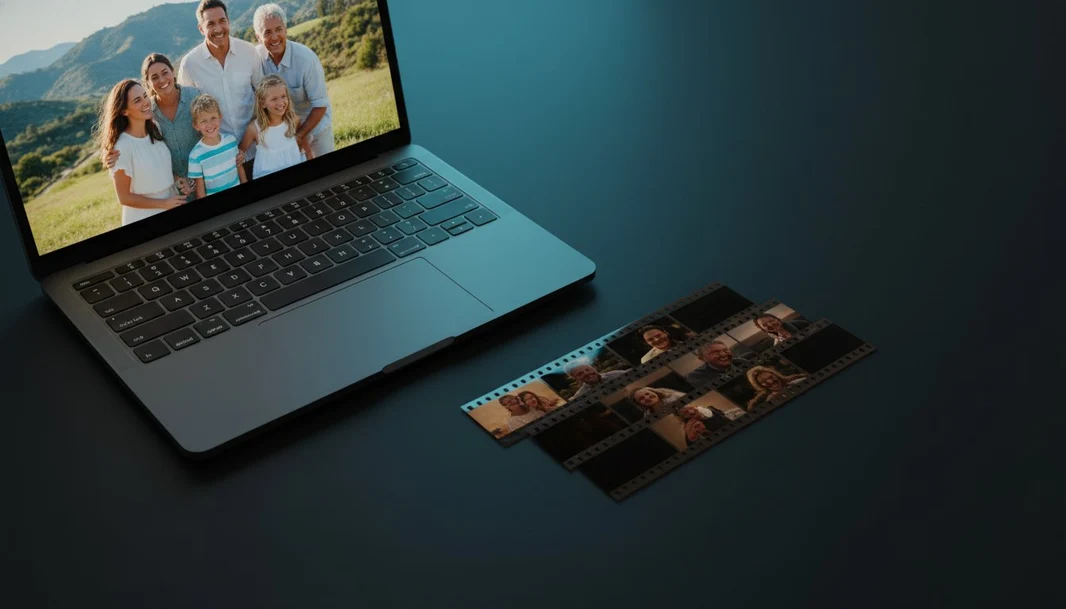
With 85% of consumers expressing a desire to digitize their family photo collections in 2026, why are so many irreplaceable negatives still sitting in dusty shoeboxes? You likely understand that these fragile strips of film hold the only records of your family’s history. However, the fear of losing them in the mail or the confusion over technical file formats often stops you from taking action. It’s stressful to watch your memories face the threat of vinegar syndrome while you wait for the right solution.
By partnering with a professional negative scanning service Mission Viejo residents can rely on, you ensure your legacy is preserved without the risks of shipping your originals away. You’ll discover how to transform aging film into high-resolution digital masterpieces that are perfect for modern printing and sharing. This article explores the essential steps for organizing your archive, selecting the best digital formats for your needs, and finding local experts who prioritize the safe return of your physical media.
Key Takeaways
- Understand why original negatives serve as the essential source of truth for high-quality digital restoration compared to scanning old physical prints.
- Learn how a local negative scanning service Mission Viejo residents trust eliminates the risks of shipping irreplaceable media to distant mail-in labs.
- Identify the technical requirements for archival digitization, including the importance of high DPI settings and professional dust-removal technology.
- Discover simple methods for sorting and grouping your film collections to ensure your new digital archive is organized and easy to navigate.
The Importance of Professional Negative Scanning in Mission Viejo
Many families in Mission Viejo hold onto old envelopes filled with thin film strips. These negatives are the original records of your most cherished moments. While you might have the developed prints, those paper photos are often second-generation copies that lose detail and color accuracy over time. Utilizing a professional negative scanning service Mission Viejo ensures you capture every bit of information stored on that original film. It’s about securing a legacy that remains clear and vibrant for your children and grandchildren. Digital preservation means your family history won’t just survive; it will be ready to share for another century.
Negatives vs. Prints: Why Scanning Film is Superior
Prints are limited by the paper and chemistry used at the time of development. Negatives contain a significantly higher dynamic range and more visual data than any physical photograph. When you scan the film directly, you access the raw source of truth. This allows for professional color correction and the ability to enlarge photos without losing sharpness. Understanding how image scanners work helps illustrate why high-resolution sensors can pull details from film that a standard print scanner simply cannot see. You preserve the authentic film grain, maintaining that classic nostalgic feel while gaining modern digital clarity.
The Threat of Film Decay in South Orange County
Film is a biological and chemical medium. In the specific climate of South Orange County, humidity and temperature fluctuations can accelerate degradation. Vinegar syndrome is a common term for the chemical breakdown of acetate film base. It starts with a faint acidic smell and ends with the film becoming brittle and unusable. By 2026, many film stocks from the late 20th century are reaching a critical point in their natural lifespan. Scratches, fading, and mold are not just possibilities; they are active threats to your family archive. Digitizing now stops the clock on this decay.
Choosing a negative scanning service Mission Viejo families can visit in person provides essential peace of mind. Shipping irreplaceable negatives through national mail carriers involves a level of risk that many find unacceptable. Packages can go missing, and resolving issues with a distant warehouse is often impossible. Hand-delivering your collection to a local expert ensures your originals never leave safe hands. You can discuss your specific goals, such as organizing digital folders by event or year, directly with the technician who will handle your media. This local connection turns a technical process into a personalized preservation experience.
High-Resolution Digitization: What Sets Professional Scanning Apart
Professional results require more than a standard home scanner. A dedicated negative scanning service Mission Viejo utilizes high-end equipment to capture details hidden deep within the film grain. While a home flatbed might produce a basic image, it often lacks the optical density to see through dark shadows or bright highlights. We focus on archival quality to ensure your digital files are ready for large-scale printing or detailed family history projects. It’s about more than just making a copy; it’s about extracting every bit of information the original photographer captured.
Resolution is the foundation of a good scan. For 35mm negatives, 2000 DPI is the absolute minimum for a quality result that looks sharp on modern screens. DPI, or dots per inch, measures the density of digital pixels captured from each inch of physical film to determine how large the final image can be printed without losing clarity. Professional labs often scan at 4000 DPI or higher to capture the finest nuances of the image. This level of detail allows you to crop into a photo or print it as a large poster while maintaining professional-grade crispness.
Dust and scratches are inevitable on older film, but they don’t have to ruin your digital files. Digital ICE technology uses infrared light to detect physical defects on the film surface and remove them during the scanning process without blurring the actual image. We also apply specific color science to match the original profiles of Kodak and Fujifilm stocks. This process restores the warm skin tones and vibrant landscapes that may have faded over the decades. If you’re ready to see the difference, you can explore our film and photo scanning options to find the right fit for your collection.
Choosing the right file format is essential for long-term use. JPEG files are convenient for sharing on social media or emailing to relatives because they’re compressed and take up less space. However, we recommend TIFF files for archival storage. TIFFs are uncompressed and preserve all the data from the scan, making them ideal for future editing or professional restoration. It’s the standard for anyone serious about the longevity of their digital archive.
Archival Standards for Negative Preservation
Standard flatbed scanners are designed for paper documents, not transparent film. They often produce “soft” images that lack the sharpness of a dedicated film scanner. We use 16-bit or 24-bit color depth to ensure millions of colors are captured accurately. This high bit-depth is crucial for future-proofing your archive against changing display technologies. Following National Archives storage guidelines is helpful for your physical originals, but professional digitization is the only way to ensure the visual data remains accessible for generations.
Restoration Techniques for Damaged Film
Automated software can only do so much for damaged media. The professional difference lies in manual color correction where a technician adjusts each frame for balance and contrast. We also have experience handling silver-halide clumping and mold growth, which often appear as dark spots or “spider webs” on the film strips. If your negatives are curly or brittle, we use specialized film gates to hold them flat and safe during the process. This careful handling prevents further damage to the delicate emulsion while ensuring the sharpest possible focus.

Local Mission Viejo Service vs. National Mail-In Labs
Choosing a negative scanning service Mission Viejo offers a level of security that national labs simply cannot match. When you ship your only copies of family memories, you’re placing them into a massive logistics system. Accidents happen in transit. Packages get crushed, lost, or misrouted. For many in South Orange County, the risk of losing irreplaceable film is too high. By staying local, you maintain a direct chain of custody from your hands to the technician’s desk. You’ll never have to track a package or worry about a box sitting on a cold porch.
National mail-in services operate like factories. They process thousands of orders daily, often prioritizing speed over individual care. A local lab provides a personalized experience. You can walk in and show the technician exactly what you need. Whether you’ve found a specific set of 35mm slides or a fragile strip of medium format film, direct communication ensures your expectations are met. We follow professional standards, such as the FADGI digitization guidelines, to ensure every scan meets federal-grade archival quality. You aren’t just a number in a queue; you’re a client with a story to protect.
Proximity also means faster results. Residents in Mission Viejo, Laguna Hills, and Aliso Viejo don’t have to wait weeks for shipping both ways. You save money on postage and specialized shipping containers. Most local projects are completed and returned much faster than national alternatives that have backlogs of thousands of customers. This efficiency doesn’t sacrifice quality; it simply removes the unnecessary delays of long-distance transport.
The Security of Hand-Delivery
Hand-delivery is the ultimate safeguard for your archive. It provides immediate peace of mind because your originals never leave the local area. You don’t have to worry about the extreme temperatures inside a delivery truck or the rough handling of automated sorting facilities. You can also discuss special handling for brittle or “curly” negatives on the spot. This face-to-face interaction eliminates the stress of wondering if your package arrived safely. It’s the most reliable way to handle media that can’t be replaced.
Supporting the South Orange County Community
Working with a local specialist keeps expertise within our community. Mission Viejo has a unique history, and local labs understand the value of preserving regional memories. These small businesses often provide better quality control because their reputation depends on every local client’s satisfaction. By choosing a negative scanning service Mission Viejo families can visit, you help sustain a focused operation that values precision over mass-market flashiness. Building a relationship with a local archival specialist ensures you always have a trusted partner for your future media preservation needs.
How to Prepare Your Negatives for a Local Transfer Service
Organizing your archive before visiting a negative scanning service Mission Viejo saves time and ensures a smooth transfer. A little preparation helps our technicians understand your vision for the final digital collection. You’ve spent years protecting these memories. Now it’s time to set them up for a successful transition into the digital world. Following a structured preparation process ensures that your high-resolution files are as organized as your original physical collection.
Start by sorting your film by format. Different sizes require specific equipment settings and film gates. Group your strips by event or date to help us create organized digital folders that reflect your family’s timeline. This step is crucial for making your archive searchable later. Handle your film with extreme care during this process. Skin oils contain acids that can permanently damage the film emulsion. We recommend wearing clean cotton gloves whenever you touch the negatives. Label your storage envelopes or boxes clearly with descriptive titles like “Smith Wedding 1978” or “Summer Vacation 1985.” Finally, contact us to schedule a local drop-off in the Mission Viejo area.
Identifying Your Film Formats
Most families have a mix of film types. 35mm is the most common format, usually found in strips of four or six frames. You might also find individual 35mm slides mounted in cardboard or plastic frames. Recognizing ‘Instamatic’ 126 negatives is easy because they are square. Tiny 110 film is roughly the size of a fingernail and requires specialized handling to ensure a clear scan. If you find larger strips from the mid-century, these are likely medium format negatives. These larger formats contain incredible detail and benefit significantly from professional, high-bit-depth scanning.
Organizing for Easy Digital Access
Think about how you want to view your photos on a computer or television. Naming your digital albums before the scanning begins helps us match your physical labels to your new digital folders. Chronologically organizing your negatives is the most efficient method. It saves time during the transfer and makes it easier for you to share specific milestones with relatives. If you also have a collection of mounted images, our guide on Professional Slide Scanning Service in Laguna Woods & South Orange County offers specific advice for those formats. Once your collection is sorted and labeled, you can contact us to start your preservation project.
Film and Tape Transfers: Your Local Partner for Negative Preservation
Film and Tape Transfers operates as a dedicated guardian of your personal history. We understand that every strip of film represents a unique moment that cannot be recreated. Our negative scanning service Mission Viejo provides the specialized care required for these delicate materials. We utilize high-bit-depth scanners to ensure every highlight and shadow is captured with professional precision. This technical authority, combined with our commitment to archival quality, makes us the reliable choice for families throughout South Orange County. We treat your memories with the same respect we would give our own heritage.
Our process is built on trust and clarity. We avoid flashy marketing in favor of a calm, service-oriented approach. Every frame is evaluated by a technician who understands the weight of the materials they handle. This focused operation ensures that your digital results are not just functional, but truly evocative of the original moment. By choosing a local partner, you gain a professional steward who is always available to answer your questions and provide expert advice on organizing your family’s digital future. We believe that preserving the past is a steady, vital task that requires both technical skill and emotional awareness.
Comprehensive Media Solutions
Our expertise extends beyond just film negatives. We provide a full suite of digitization services to help you consolidate your entire family archive into a single, accessible format. You can learn more about our professional VHS to digital transfer for your home movie collection. For those with vintage cinema reels, our 8mm film scanning guide offers detailed insights into preserving movie history. We also handle 35mm slides, photo scanning, and various tape formats like MiniDV, Hi8, and VHS-C. Residents in Aliso Viejo and Mission Viejo prefer our local lab because we offer a no-nonsense, high-quality approach to every project.
Start Your Preservation Journey Today
Beginning your project is a straightforward process. We recommend a local consultation to discuss the specific needs of your archive, especially for bulk negative scanning projects. We provide clear, direct advice on the best file formats for your goals, whether you need JPEGs for social media or TIFFs for archival printing. Our workflow prioritizes the safety of your media at every step. Once the digitization is complete, we ensure the safe return of all your original film alongside your new high-resolution digital files. Our reputation is built on the reliable nature of our work and the steady satisfaction of our neighbors. Don’t let your legacy fade in a shoebox. Preserve your Mission Viejo memories with Film and Tape Transfers today.
Start Securing Your Family History Today
Securing your family history is a responsibility that requires both technical precision and careful handling. You’ve learned how professional digitization captures the rich detail hidden in your original film strips, providing a quality level that standard prints cannot match. By choosing a local negative scanning service Mission Viejo residents can visit in person, you eliminate the anxiety of lost mail and ensure your originals remain in safe hands throughout the process.
Since 1990, our team has served the South Orange County community with specialized archival equipment and a commitment to personal service. We offer local hand-delivery and pickup options to make your preservation journey as seamless as possible. Your negatives are the essential source of truth for your family’s story. Preserving them now ensures those moments stay vibrant for the next generation to enjoy.
Secure Your Family Legacy—Contact Our Mission Viejo Scanning Experts Today
Your memories deserve the highest level of care. We look forward to helping you protect your past and bridge the gap between analog history and a digital future.
Frequently Asked Questions
What is the best resolution for negative scanning service in Mission Viejo?
The ideal resolution for standard 35mm negatives is 4000 DPI. This high level of detail allows you to enlarge your photos or view them on modern high-resolution screens without seeing digital pixels. While 2000 DPI is the baseline for quality, our professional equipment captures the fine nuances of the original film grain. This ensures your digital files remain clear even if you decide to print them as large posters later.
Can you scan negatives that have been cut into individual frames?
Yes, we can scan both individual frames and standard film strips. Our technicians use specialized film gates designed to hold single negatives flat and secure during the digitization process. This prevents the edges from curling and ensures the sharpest possible focus across the entire image. You don’t need to worry if your collection has been separated into individual pieces or small segments over the years.
How do I know if my negatives are suffering from vinegar syndrome?
The most obvious sign of vinegar syndrome is a distinct acidic or vinegar-like smell coming from your film storage boxes. You might also notice the film becoming brittle, shrinking, or developing a white powdery residue on the surface. If your negatives feel stiff or have started to curl tightly, they are likely undergoing chemical breakdown. Immediate digitization is necessary to preserve the images before the film becomes completely unusable.
Do you offer negative scanning for formats other than 35mm?
We provide professional scanning for a variety of formats including 126, 110, and medium format film. Each size requires specific handling and calibrated equipment to achieve the best results. Whether you have square “Instamatic” negatives or larger professional film, we ensure each frame is captured with high bit-depth color. Our goal is to provide a comprehensive solution for every type of legacy media in your family archive.
Will my original negatives be returned to me after scanning?
Yes, your original film negatives are always returned to you in their original condition. We understand these are irreplaceable physical records of your family history. Once the digital transfer is complete, we carefully repackage your film for safe pickup or hand-delivery. We recommend keeping these originals in a cool, dry place as a secondary backup to your new high-resolution digital files.
How long does the negative scanning process typically take for local orders?
Standard turnaround time for local orders in Mission Viejo is typically seven to ten business days. This timeframe allows our technicians to perform careful manual color correction and quality checks on every frame. Larger or more complex collections might take longer depending on our current project volume. We prioritize precision over speed to ensure your digital masterpieces meet our archival standards for quality and clarity.
Can you restore the color on faded negatives from the 1970s and 80s?
We utilize advanced color science and manual adjustments to restore the vibrant hues of older film stocks. Negatives from the 1970s and 80s often suffer from chemical fading that shifts the colors toward magenta or cyan. Our technicians work to rebalance these tones, bringing back the natural skin tones and landscapes of the original moment. This process helps your memories look as fresh as the day they were first captured.
Why should I choose a local Mission Viejo service over a mail-in lab?
Choosing a local negative scanning service Mission Viejo families trust provides immediate security and peace of mind. You avoid the risks of shipping irreplaceable items through national carriers where packages can be lost or damaged. Hand-delivery allows you to speak directly with the person handling your media. This personal connection ensures your specific organizational needs are met while supporting a dedicated small business in your own community.