
What if the greatest threat to your family history isn’t a fire or a flood, but the very glue holding your photo albums together? You’ve likely spent years protecting those heavy binders, yet the “magnetic” pages and fading ink are slowly erasing the stories they hold. It’s stressful to think about handing these irreplaceable memories over to a stranger or worrying they might get lost in the mail. Finding a reliable photo album scanning service Irvine families can trust is the first step toward permanent peace of mind.
We understand that an album is more than just a collection of pictures; it’s a carefully curated narrative of your life. You deserve a solution that captures the entire page, including those handwritten notes and specific layouts, without risking damage to the originals. This 2026 guide shows you how to secure high-resolution digital files for easy cloud sharing while ensuring your physical albums are handled with expert care. We’ll cover everything from archival DPI settings to professional color correction, helping you transform faded relics into vibrant, lasting digital legacies.
Key Takeaways
- Protect your family history from South Orange County’s environmental risks by understanding the urgency of archival digitization.
- Choose a professional photo album scanning service Irvine trusts to ensure high-resolution results with standard color restoration.
- Learn why manual flatbed scanning is the only safe way to preserve fragile album pages without risking physical damage.
- Follow a simple organization system to categorize your collection by decade or event before starting the preservation process.
- Discover the benefits of local, one-at-a-time handling for your physical media to guarantee the safe return of every heirloom.
Why Irvine Families are Prioritizing Photo Album Digitization in 2026
Professional photo album scanning is the specialized conversion of bound family memories into secure, high-resolution digital archives. For residents in South Orange County, this process is no longer just a hobby project. It’s a vital step in protecting personal history from the inevitable passage of time. Utilizing a professional photo album scanning service Irvine families trust ensures that these fragile records are captured with archival precision before the physical materials fail.
The climate in Irvine and surrounding coastal areas presents specific risks to physical media. While the weather is pleasant for residents, the combination of coastal humidity and high UV light exposure accelerates the fading of 20th-century photo paper. Many families also struggle with “magnetic” or self-adhesive album pages. These popular 1970s binders use acidic glues that eventually yellow the prints and fuse them to the page. Professional digitization is a key component of digital preservation, allowing you to bypass these chemical risks and secure your legacy in the cloud.
The Risk of Physical Decay in Legacy Media
Chemical breakdown is a persistent threat to older photo collections. Color prints from the 1970s and 1980s are particularly vulnerable because the organic dyes used during those decades have a limited shelf life. By 2026, many of these images are reaching a critical point of color shifting or total loss. Some albums also contain film elements that may develop vinegar syndrome. This occurs when the acetate base of the film begins to rot, releasing a sharp odor and causing the media to shrivel. Professional scanning captures the image data now, effectively stopping the clock on physical decay.
The Emotional Value of Digital Accessibility
Digitization changes how families interact with their past. A physical album can only be in one place at a time, but a digital archive is instantly shareable. This accessibility is essential for modern family life and heritage planning.
- Universal Access: Siblings living in different cities can all own a high-resolution copy of the family history.
- Estate Planning: Digital files are easily integrated into family trusts and heritage records.
- Searchable History: Organize your photos by decade or event, making it simple for the next generation to find specific memories.
Creating a searchable family history ensures that the stories behind the photos aren’t lost. For Irvine residents, moving these memories to a digital format means they’re ready for the next fifty years of family milestones.
What to Look for in a Premium Irvine Photo Scanning Service
Selecting a provider for your family archives is a decision based on trust. You aren’t just purchasing a digital file; you’re hiring a steward for your personal history. A premium photo album scanning service Irvine families rely on should prioritize physical safety and visual clarity above all else. Many national brands require you to ship your originals to massive out-of-state plants. This increases the risk of loss or damage in transit. Choosing a local expert ensures your albums remain in professional hands from start to finish.
Technical Standards: Resolution and File Formats
Archival quality is defined by the level of detail captured during the scan. 600 DPI is the professional minimum for standard photo prints, providing enough detail for high-quality reprints. For smaller photos or those requiring deep restoration, 1200 DPI is often preferred. Optical resolution is the key to clear enlargements, as it represents the true physical detail the scanner’s hardware can see. When preserving your digital memories, you should receive both JPEG and TIFF files. JPEGs are perfect for social media and cloud sharing. TIFF files are the archival gold standard because they don’t compress or lose data over time.
White-Glove Handling and Equipment
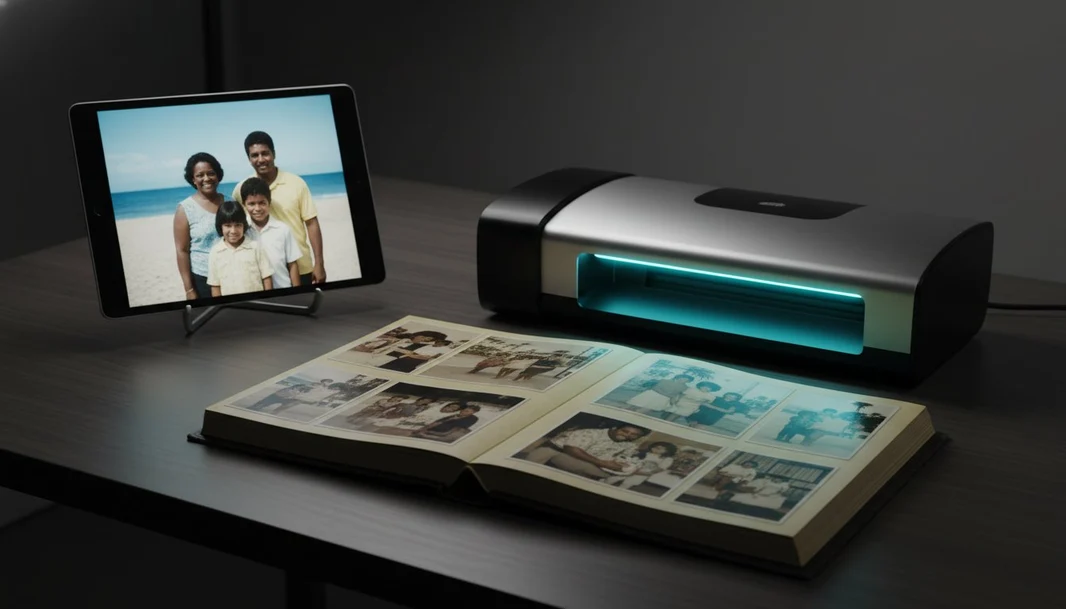
The method used to scan your photos is just as important as the resolution. High-speed document feeders are common in low-cost operations, but they pose a significant threat to fragile, aging paper. Manual flatbed scanning is the safest approach for individual photos. For delicate bound albums, specialized overhead scanners are used to capture the entire page without removing the prints. This method preserves handwritten notes and the original layout of the memories. A reputable provider will always use lint-free gloves and anti-static brushes to protect the physical surfaces from oils and dust. If you have a diverse collection including old slides or film, local media preservation experts can help consolidate all your formats into one digital library.
Standard features should always include color restoration and dust removal. Over time, chemical dyes in 20th-century photos shift toward magenta or yellow hues. Professional technicians use specialized software to rebalance these colors, often making the digital copy look better than the faded original. These restorative steps should be part of the core service, ensuring every image is returned in its best possible condition.

Comparing Album Scanning Methods: Flatbed vs. High-Speed vs. Hand-Scanning
Selecting the right equipment is the most critical decision in the digitization process. Not all scanners are designed for the delicate nature of family heirlooms. Many high-volume operations use document feeders to process images quickly, but this “one size fits all” approach often fails when it comes to fragile paper. A professional photo album scanning service Irvine residents trust should always prioritize the physical safety of the original over the speed of the machine. At Film and Tape Transfers, we focus on manual inspection for every page to ensure no damage occurs during the transition to digital.
The Danger of Automatic Document Feeders (ADF)
Automatic Document Feeders use high-speed rubber rollers to pull items through a scanning path. While this works for modern office paper, it’s often disastrous for 20th-century photo paper. These rollers can cause immediate surface scratches or even tear brittle edges. Older photos from “magnetic” albums often carry a sticky adhesive residue on the back. This residue can clog high-speed machines, leading to catastrophic jams that can destroy an irreplaceable original. Manual placement on a flatbed scanner is the only way to guarantee perfect alignment and zero physical stress on the paper. It’s a slower process, but it’s the only safe way to handle your history.
Preserving the Context: Full Page vs. Individual Cuts
True preservation captures more than just a single face; it captures the entire story. Scanning the full album page allows you to save the handwritten captions, dates, and decorative stickers that provide vital context. Following academic guidelines for getting the best possible images, our process involves capturing the high-detail layout first. We then provide individual, auto-straightened crops of each photo. This non-destructive method keeps your original albums intact while giving you a versatile digital library.
This dual-layered approach ensures you don’t lose the “metadata” of your family history. When you see a photo of a holiday dinner, you also see the note your grandmother wrote in the margin. Balancing these high-detail archival scans with manageable file sizes is a hallmark of a premium photo album scanning service Irvine families can rely on for long-term legacy conservation. We ensure your digital files are organized and ready for the cloud without sacrificing the charm of the original bound book.
Step-by-Step: Preparing Your Photo Albums for Professional Scanning
Preparing your collection for digitization is a task that pays dividends in both safety and organization. Before you visit a photo album scanning service Irvine provides, take the time to review your inventory. Start by identifying high-priority items. These are often the oldest albums or those showing signs of physical wear. By sorting your collection now, you ensure that the most fragile stories are captured first. It’s a simple way to bring order to years of accumulated memories.
Organizing your albums by decade or major life event simplifies the digital folder naming process. When our technicians receive your materials, they can mirror your physical organization in the digital space. This makes it easy to find specific memories once you upload the files to the cloud. If you find loose photos tucked between pages, leave them in place or put them in a labeled envelope. This preserves the chronological context of the images and prevents them from sliding out during transport.
Organization and Categorization
Clear labeling is essential for a smooth project. We recommend using Post-it notes on the outside covers only. Don’t place adhesive directly on a photo or a fragile page. Group your albums by family branch or chronological order to create a logical flow. Creating a simple “Master List” on paper or in a spreadsheet allows you to cross-reference your physical binders with the finished digital files later. This level of preparation ensures nothing is overlooked during the scanning process.
Safe Handling and Protection
Physical protection is the primary goal during transport. Avoid using rubber bands or paper clips to hold loose items together. These can leave permanent indentations or rust stains on aging paper. If you have loose prints that aren’t in an album, use acid-free tissue paper to separate them. This prevents the ink from one photo from sticking to the surface of another. It’s a small step that prevents significant surface damage.
The “sticky page” dilemma is a common issue with magnetic albums. If a photo feels fused to the page, don’t try to peel it off. Forcing a stuck photo can tear the backing or lift the image layer entirely. Our professional equipment can scan these photos while they remain safely in the album. For local families ready to begin this process, you can schedule your media drop-off at our South Orange County facility. Finally, pack your albums in sturdy plastic bins rather than cardboard boxes. This protects against moisture and dust during the drive to our office.
Film and Tape Transfers: Your Local Expert for Irvine Media Preservation
Film and Tape Transfers provides a specialized approach to legacy conservation for residents in Irvine, Laguna Woods, and Aliso Viejo. We believe every family heirloom deserves individual attention. Our commitment to “one-at-a-time” handling means your irreplaceable albums are never treated like bulk inventory. Utilizing a photo album scanning service Irvine families recommend ensures your history stays in expert hands within your own community.
Our work extends beyond physical prints to include a wide range of analog formats. We offer comprehensive solutions for vhs to digital transfer, ensuring your home movies are preserved alongside your still images. Keeping your memories local eliminates the anxiety of shipping packages across the country. You can drop off your collection at our South Orange County facility and speak directly with the technician who will perform the work.
A Legacy of Trust in South Orange County
We’ve served the local community since 1990. This long-standing history is built on precision and reliability. When you choose a local specialist, you benefit from personal accountability and clear communication. There’s no middleman or faceless processing plant. Your original albums are kept in a secure, climate-controlled environment until they are safely returned to you. This local focus is the foundation of our service model.
The Complete Preservation Solution
A unified digital library is the most effective way to share your family history. We can integrate your high-resolution photo scans with 8mm film scanning to create a single, organized archive. This holistic approach ensures that every format, from audio cassettes to Super 8 reels, is preserved for the next generation. It’s time to move your memories from dusty boxes to secure digital storage.
Scheduling a drop-off is a straightforward process designed for your convenience. We offer flexible options for South Orange County collections to fit your schedule. Take the first step toward securing your past today. Contact us today to preserve your family’s legacy and discover the peace of mind that comes with professional archival care.
Securing Your Family Legacy for the Future
Preserving your history requires more than a simple scan; it demands a commitment to archival standards and physical safety. You now understand how manual flatbed techniques protect fragile prints from the risks associated with high-speed machinery. By choosing a local photo album scanning service Irvine families trust, you ensure your originals never leave South Orange County. Our team has provided this white-glove, local handling since 1990, delivering high-resolution 600 to 1200 DPI archival scans that capture every detail of your bound memories.
Moving your collection from aging binders to a secure digital library is an investment in your family’s future. It’s the only way to stop the chemical decay of “magnetic” pages and share your stories with the next generation. We handle every heirloom with the precision and care it deserves. Get a Free Quote for Your Irvine Photo Album Scanning Project and take the final step toward permanent digital preservation. Your past is irreplaceable, and we’re here to help you protect it forever.
Frequently Asked Questions
Do I need to take the photos out of the album before scanning?
You don’t need to remove photos from your albums. Our specialized overhead and flatbed scanners capture the entire page safely. This is especially important for “magnetic” albums where photos are fused to the backing. Removing them often causes permanent tearing or surface damage. We preserve the original layout and any handwritten notes alongside the individual images.
What is the best resolution (DPI) for scanning old photo albums?
A resolution of 600 DPI is the archival standard for most photo prints. This provides enough detail for high-quality reprints at larger sizes. For very small photos or those requiring significant restoration, we use 1200 DPI. Using a professional photo album scanning service Irvine ensures your files have the optical clarity needed for 2026 digital standards.
How long does the photo album scanning process take for Irvine customers?
Turnaround times depend on the number of albums and the complexity of the pages. Small projects might be completed in a few days, while larger family archives take longer. We prioritize precision over speed to ensure every page is handled with care. You’ll receive a clear timeline once we assess the specific volume and condition of your collection.
Can you restore faded or damaged photos during the scanning process?
Yes, we include standard color restoration and dust removal with every scan. Most 20th-century photos suffer from chemical fading or color shifts toward magenta and yellow. Our technicians use specialized software to rebalance these colors. The goal is to produce a digital file that looks as vibrant as the original print did when it was first developed decades ago.
Is it safe to mail my photo albums, or should I drop them off?
Local drop-off is the safest option for Irvine residents. While mailing is possible, it introduces risks of loss or environmental damage during transit. Dropping off your albums at our South Orange County facility ensures they stay in a secure, climate-controlled environment. You’ll also have the opportunity to discuss your project directly with the local experts who will handle your media.
What digital formats will my scanned photos be delivered in?
We typically deliver images in JPEG and TIFF formats. JPEGs are compressed files that are perfect for social media, email, and cloud sharing. TIFF files are uncompressed archival copies that preserve every bit of data for long-term storage. This dual-format delivery ensures your photo album scanning service Irvine results are both practical for daily use and secured for the future.
How much does a professional photo album scanning service cost in Irvine?
Pricing for professional scanning depends on several factors. These include the total number of albums, the number of photos per page, and the physical condition of the binders. Since every family archive is unique, we provide customized quotes based on your specific needs. This ensures you only pay for the exact level of care and resolution your collection requires.
Can you scan oversized albums or scrapbooks?
Yes, our equipment handles oversized scrapbooks and large-format albums. Standard desktop scanners often cut off the edges of larger pages, but our professional overhead systems capture the entire layout. This is ideal for preserving the context of newspaper clippings, certificates, and large family portraits that don’t fit in traditional binders. We ensure the full page is captured with archival precision.