


VHS Myths vs. Reality: Preserving Your South Orange County Memories in 2026
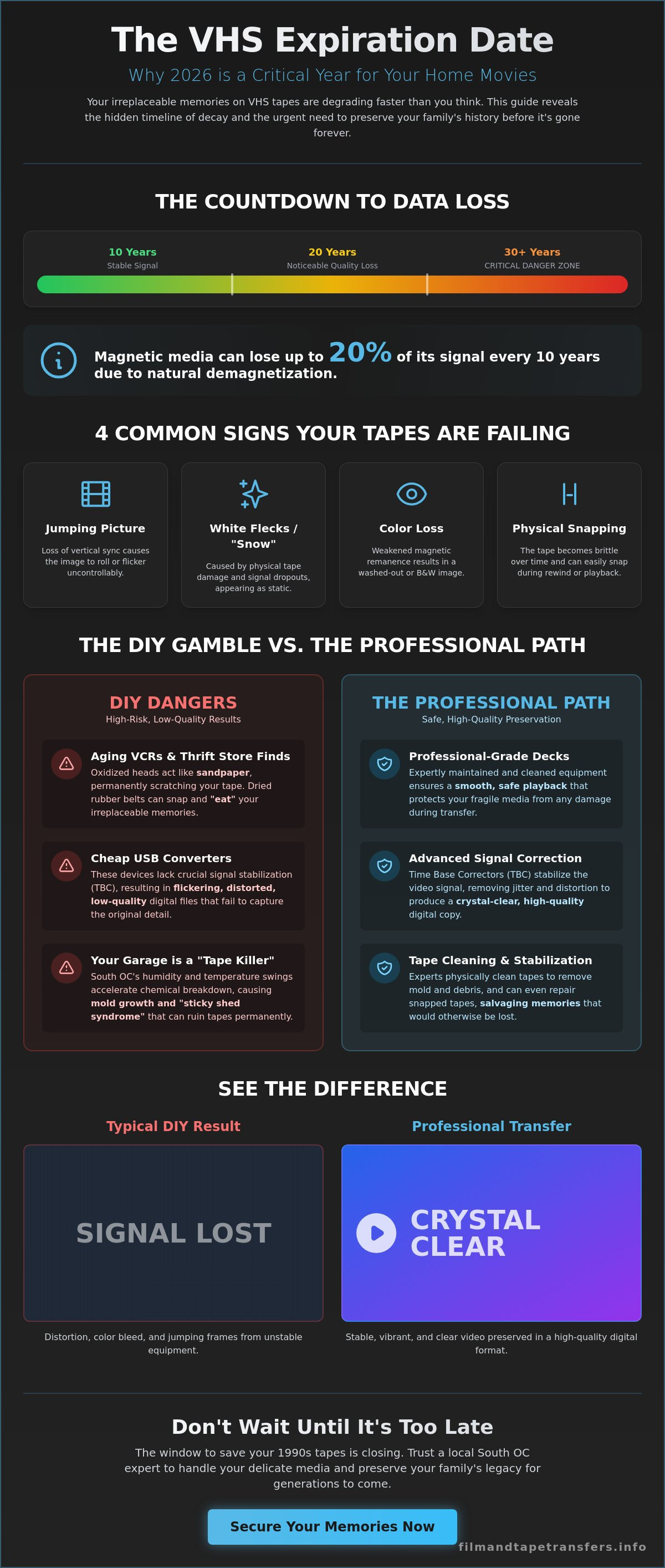
Did you know that magnetic media can lose up to 20 percent of its signal every 10 years? For families in South Orange County, this means your old vhs tapes are likely reaching a critical point of decay in 2026. You probably feel the weight of these aging memories sitting in a box, and it's frustrating when you don't even have a working VCR to see if the footage is still there. It's natural to worry about losing a 1995 wedding video or a child's first steps to the inevitable "sticky shed syndrome" or simple demagnetization.
You deserve a clear path to saving your history without the stress of DIY guesswork. This article reveals the truth about tape degradation and shows you how to safely preserve your memories. We'll compare the risks of home conversion kits against professional standards to help you choose the best preservation method. By the end, you'll know exactly how to find a trusted local expert in South OC to handle your media with the care it deserves.
Key Takeaways
- Understand why magnetic signals naturally fade and why 2026 marks a critical deadline for preserving your family history.
- Learn the hidden risks of using aging equipment that can permanently scratch or "eat" your irreplaceable vhs tapes.
- Discover why common DIY USB converters often fail to provide the signal stability required for a high-quality digital transfer.
- Identify the specific environmental threats in South Orange County that turn local garages into "tape killers."
- Explore the professional cleaning and stabilization process used by local experts to safeguard your most precious memories.
The 'VHS is Forever' Myth: Why 2026 is a Critical Year for Your Tapes
Many families across South Orange County believe their home movies are safe as long as they stay in a cool, dark closet. This is the "VHS is Forever" myth. In reality, magnetic tape was designed for a functional life of 10 to 15 years. It was never intended to be a permanent storage medium. As we approach 2026, the majority of tapes recorded during the 1980s and 1990s have reached their physical expiration date. The magnetic signals are literally fading away.
This timeline creates a sense of urgency for anyone holding onto old recordings. While vhs tapes once felt durable, they are now fragile relics. The transition from analog to digital is no longer a matter of convenience; it's a race against total data loss. This loss is often called bit rot. In the context of analog media, bit rot refers to the gradual decay of the magnetic signal until a player can no longer track the image. Once this signal drops below a certain threshold, the memories are gone forever.
The Science of Magnetic Degradation
Magnetic tape relies on a complex chemical mixture to hold an image. Over time, the binder chemicals that glue the magnetic particles to the plastic substrate begin to absorb moisture from the air. This process causes the tape to become sticky or brittle. The physical construction of the VHS format makes it particularly susceptible to this chemical breakdown. When a tape develops what experts call sticky shed syndrome, it can no longer pass through a playback head without shedding its coating. Magnetic remanence is the ability of a material to retain a magnetic field. As remanence weakens over 30 years, the colors in your videos become washed out and the audio develops a persistent hiss.
Why 30 Years is the Danger Zone
Tapes from the 1990s are currently at the highest risk of failure. While older 16mm or 8mm film can last 100 years under ideal conditions, magnetic tape is far more fragile. For Laguna Woods residents with large collections, the 30 year mark is a critical threshold. Many tapes recorded in 1996 are now hitting this 30 year limit. If these tapes are not transferred soon, the physical degradation will make high quality conversion impossible. We see these common issues in aging collections:
- Loss of vertical synchronization which causes the picture to jump.
- White flecks or "snow" appearing across the screen during playback.
- Complete loss of color, resulting in a grainy black and white image.
- Physical snapping of the tape during the rewind or fast-forward process.
Preserving memories requires action before the physical media fails. By 2026, the window for a clean transfer for many 1990s tapes will be closing. Trusting a local expert to handle these delicate items ensures that your family history is saved before the magnetic particles disappear.
Myth: 'I Can Just Buy a Working VCR and Watch Them Anytime'
Many families in South Orange County believe their old tapes are safe because they can simply find a player later. This logic fails to account for the reality of hardware obsolescence. Funai Electric, the world's last manufacturer of VCRs, ended production in July 2016. This means any equipment you find today is at least a decade old, and most consumer units date back to the 1990s. Finding a machine in "new" condition is nearly impossible in 2026.
Vintage electronics rely on internal rubber belts to drive the tape reels. Over time, these belts dry out, crack, or turn into a black, tar-like residue. When a belt fails during playback, the machine often stops mid-cycle. This can trap your irreplaceable vhs tape inside the machine, requiring a manual teardown to retrieve it. Even worse, oxidized video heads can act like sandpaper. They physically scratch the magnetic coating off your film, leading to permanent data loss that no amount of digital restoration can fix.
The Dangers of Thrift Store Equipment
Buying a used VCR at an Aliso Viejo garage sale or a Mission Viejo thrift store is a high-risk gamble. These machines often sit in humid garages for years, becoming breeding grounds for mold. If a previous owner played just one moldy tape, the spores remain on the internal rollers and heads. When you insert your wedding video, the machine cross-contaminates your media. Professional-grade decks require deep cleaning with 99% isopropyl alcohol and specialized chamois swabs to ensure they don't ruin the media they are meant to play. Most home users don't have the tools to perform this essential maintenance.
The Analog-to-Digital Connection Gap
Modern 4K and 8K smart TVs have moved entirely beyond the analog era. Most new displays lack the red, white, and yellow composite inputs required by a VCR. While cheap HDMI converters exist online, they often introduce significant signal noise and visual artifacts. High-resolution screens amplify every flaw in an analog signal. This makes the footage look grainy, jittery, or distorted. Choosing a professional vhs to digital transfer ensures your memories are optimized for modern viewing without the hardware headaches. We focus on preserving memories with specialized equipment that captures the highest possible signal quality from your aging tapes.
- Internal belts in 20-year-old VCRs often liquefy, causing mechanical jams.
- Worn video heads can cause "tracking" errors that permanently distort the magnetic tape.
- Connecting 1990s technology to a 2026 smart TV usually results in a poor, stretched image.
- Dust and debris inside unserviced machines can cause physical tears in the tape ribbon.
The 'Cheap USB Converter' Myth: Quality vs. Convenience
Many families in South Orange County think a $20 Amazon dongle is a simple solution for their home movie collection. It's a common misconception. These plastic adapters often fail to capture the nuances of old magnetic tape. While the low price is attractive, the results usually include distorted colors and grainy images. Professional preservation requires more than a basic USB connection. You aren't just moving files; you're attempting to stabilize a decaying analog signal.
The real cost of DIY isn't just the hardware. It's the time. Digitizing is a real-time process. If you have 30 tapes that are two hours each, you'll spend 60 hours just recording. You also have to monitor the transfer for errors, adjust levels, and trim the files. Most people find that their weekends disappear into a project that never quite finishes. Trusting a specialist allows you to focus on enjoying your memories rather than troubleshooting old hardware.
Understanding Signal Stability and TBC
Old tapes rely on an analog signal that degrades over time. This degradation causes "jitter" or "tearing" at the top of the screen. A Time Base Corrector (TBC) is essential hardware that stabilizes these signals before they reach the computer. Consumer-grade capture cards lack this technology. Broadcast-grade hardware uses internal buffers to ensure every frame aligns perfectly. Without a dedicated TBC, audio-video sync issues are almost guaranteed after the first ten minutes of footage. This leads to voices that don't match the movement of lips, a problem that's very difficult to fix in editing software.
Compression and Resolution Realities
Many DIY kits claim to "upscale" your footage to 1080p high definition. This is often a marketing gimmick. A standard vhs tape has a native resolution of 480i. Stretching that small image to fit a modern screen usually results in a blurry, pixelated mess. Professional transfers focus on capturing the highest quality 480i signal with high bitrates. This preserves the original visual detail without adding digital artifacts. Similar challenges exist for later formats, making professional minidv transfer services equally important for maintaining clarity in your digital archives.
- Cheap converters use heavy H.264 compression that destroys detail in dark areas.
- Professional archival standards often use uncompressed or high-bitrate ProRes files.
- DIY software often crashes during long transfers, leading to lost work.
- Native 480i capture preserves the original look of your vhs recordings without artificial distortion.
Storage Myths: Why Your Irvine Garage is a Tape Killer
Many families believe a garage is a safe place for old media because it stays dark and out of the way. This is a dangerous misconception. Magnetic tape is a delicate combination of plastic and chemical binders. In an uninsulated Irvine garage, temperatures can swing from 55 degrees at night to over 90 degrees during a summer afternoon. These 35-degree fluctuations cause the tape to physically expand and contract. This constant movement stretches the thin plastic, leading to permanent signal loss and tracking errors. Your vhs collection deserves a stable environment, not a storage unit that mimics an oven.
The South OC Climate Challenge
Coastal cities like Dana Point and San Clemente face a specific threat: high humidity. When moisture levels exceed 50 percent, mold spores begin to feed on the organic binders in magnetic media. Mission Viejo attics are equally hazardous. Heat rises, and attic temperatures often reach 125 degrees in July. This intense heat can literally bake the lubricant out of the tape, making it brittle and prone to snapping. A safe storage environment must meet three specific criteria to ensure longevity:
- Consistent temperature between 65 and 70 degrees Fahrenheit.
- Relative humidity levels strictly below 45 percent.
- Elevation at least 12 inches off the floor to avoid concrete moisture seepage.
If your storage area feels damp or smells musty, your tapes are already at risk. The salt air in South Orange County accelerates the oxidation of the metal particles on the tape surface. This results in a "snowy" picture or complete loss of audio when you finally try to watch those old home movies.
How to Spot a Dying Tape
You can often see the damage before you even press play. Look through the clear window of the cassette. If you see a white, powdery residue on the edges of the tape pack, that's active mold growth. Another warning sign is a sharp, acidic smell similar to salad dressing. This indicates vinegar syndrome, a chemical breakdown where the acetate base begins to decompose. Never put a molded or smelling tape into a player. The mold spores will transfer to the internal heads. This ruins the machine and cross-contaminates every other vhs tape you insert later. We act as a trusted guardian for your media, ensuring these issues are handled professionally during the conversion process.
Protect your family legacy before the South Orange County climate causes irreversible damage. Preserve your memories with our professional transfer services and secure your history for the next generation.
Professional Preservation: The Trusted Path for South OC Families
Professional preservation is the only reliable way to save home movies in 2026. Film and Tape Transfers serves Laguna Hills and the wider South Orange County area with specialized care. We understand that a vhs tape is a fragile physical object. It isn't just data; it's a magnetic record that degrades every year. Our process starts with a physical inspection of every cassette. We use professional cleaning and stabilization to remove surface dust, debris, or oxidation before the transfer begins. This preparation is vital. It protects the original media and ensures a clear, stable image for the digital file.
Choosing a local expert provides peace of mind that national mail-in services can't match. You know exactly who's handling your legacy. We treat every tape as an irreplaceable heirloom. Our studio uses Time Base Correction (TBC) hardware to fix jittery video signals during the capture process. This technology helps old tapes look their best on modern 4K televisions. The final result is a high-quality digital file that won't fade, skip, or wear out over time.
The Film and Tape Transfers Advantage
Our facility utilizes specialized, studio-grade equipment for vhs-c transfer and standard video formats. We don't rely on consumer-grade converters found at retail stores. Instead, we use professional playback decks maintained to strict technical standards. The local nature of our service is a major benefit for South OC families. You won't have to worry about shipping risks, transit damage, or lost packages. Everything stays right here in the community. Once the transfer is complete, we offer digital delivery through secure cloud folders or physical USB drives. This makes it easy to share your history with family members across the globe instantly.
Next Steps for Your Collection
Starting the preservation process is easy when you use a triage strategy. Look through your collection and pick the five most important tapes first. Focus on unique events like weddings, holiday gatherings, or first steps. By digitizing these priority items first, you ensure the most valuable memories are safe from further decay. We invite you to visit us for a local consultation in Laguna Woods to discuss your specific project. Beyond video, we also provide a professional slide scanning service for those boxes of family photos. Preserving memories today ensures they're available for your children and grandchildren in the decades to come.
Secure Your South Orange County History Before 2026
Magnetic tape isn't a permanent storage solution. The Council on Library and Information Resources notes that magnetic media typically lasts between 10 and 30 years before significant signal loss occurs. Since 1990, we've seen how the heat in an Irvine garage or the humidity of a coastal home can accelerate this decay. Relying on a used VCR or a cheap plastic converter often leads to permanent tracking errors or snapped tapes. Your family's unique history deserves better than a low-quality digital transfer that loses the details of your most precious moments.
Choosing professional preservation ensures your collection is handled with the care it requires. We use high-resolution archival equipment to capture every possible detail from your original recordings. As a trusted local expert for over 34 years, we prioritize the safety of your media through hand-delivered safety for your irreplaceable tapes. This eliminates the risks associated with shipping your only copies across the country.
Don't let time or poor storage conditions erase your past. Preserve your family's vhs memories today with our local South Orange County experts. We're here to help you move your history into the digital age with confidence.
Frequently Asked Questions
Is it worth converting VHS to digital in 2026?
Yes, 2026 is a critical year because magnetic tape suffers a 10 to 20 percent signal loss every decade. By this year, most tapes from the 1990s have reached the 30 year mark. This is the industry standard for the end of a tape's shelf life. Converting your vhs recordings now prevents "sticky shed syndrome" or total data loss. It's the only way to ensure your family history remains viewable.
Can I still buy a VCR to watch my old tapes?
You can only find VCRs on the secondary market because Funai Electric, the last manufacturer, ended production in July 2016. Used units found online often carry a 30 percent risk of mechanical failure. These aging machines can easily "eat" or scratch your irreplaceable ribbons. Professional transfer services use maintained, high-end decks that provide better stability than a consumer-grade VCR found at a thrift store.
How do I know if my VHS tapes have mold?
Check for white, fuzzy spots or a chalky substance on the tape reel through the clear plastic window. Mold grows quickly when humidity levels exceed 60 percent, a common issue in coastal South Orange County homes. Don't put a moldy tape into a player. The spores can spread to your equipment and other tapes in less than 60 seconds. Professional cleaning is required before any digitization can happen.
What is the best digital format for VHS conversion?
The MP4 format using the H.264 codec is the best choice for 2026. It offers a 50 percent reduction in file size compared to older AVI files while keeping the image sharp. This format is compatible with 99 percent of modern devices like smart TVs and smartphones. It's a versatile, long-term solution for keeping your family films accessible and easy to share with relatives across the country.
How long do VHS tapes last in storage?
Standard vhs tapes typically last between 15 and 30 years. Tapes kept in garages or attics degrade 25 percent faster due to heat and moisture. By 2026, a tape from 1996 is already at the end of its reliable life. Magnetic particles naturally lose their charge over time. This leads to the "snow" and flickering lines you see during playback. Preservation can't wait much longer.
Can a damaged or 'eaten' VHS tape be repaired and digitized?
Technicians can often repair physical breaks or crinkled tape sections by performing a professional splice. While a splice causes a loss of roughly 5 seconds of footage, the rest of the tape is usually recoverable. Specialized repair tools allow us to fix the housing or the ribbon so the media can be digitized. It's a delicate process that saves memories that would otherwise be lost to the trash.
Why should I choose a local South Orange County service over a big-box mail-in lab?
Local services remove the 5 percent risk of your irreplaceable media getting lost in the mail. Large mail-in labs process over 10,000 tapes a week, which often results in a lower quality, "one size fits all" transfer. A South Orange County specialist offers hands-on care and faster turnaround times. You'll often have your digital files ready in 14 days or less without the stress of national shipping.